$130M IFAD-funded projects prioritize Global Compact companies in Tanzania

Pilot of more than US$130 million in IFAD-funded projects with preferential treatment for UN Global Compact participants in project procurement kicks off in Tanzania
The International Fund for Agricultural Development (IFAD) and the UN Global Compact launched a significant new partnership offering preferential treatment to participating companies of the UN Global Compact in project procurement for IFAD-funded projects in Tanzania in December 2023.


With the potential to scale to more than US$130 million in project funding in Tanzania, this is the first collaboration between IFAD and the UN Global Compact to influence updates to Government policy.


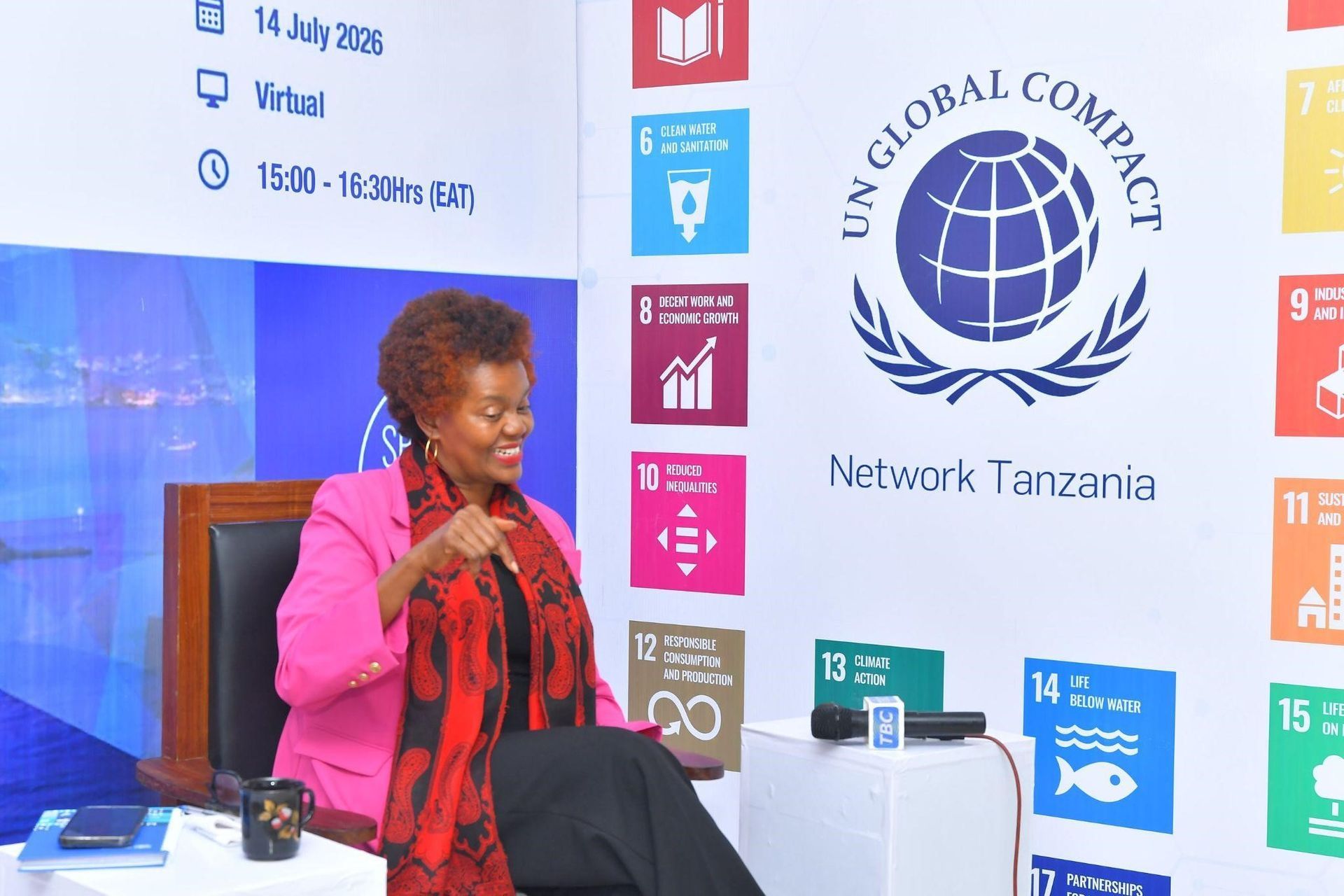
Marsha Macatta-Yambi, Executive Director of Global Compact Network Tanzania, and Priscilla Torres, Chief of Project Procurement at IFAD, jointly presented the pilot project, which will grant a 5 per cent grading preference in the evaluation of public procurement bids to companies participating in the UN Global Compact, at the pre-annual general meeting of the UN Global Compact in Dar es Salaam on 12 December 2023. 


In practice, bidders must demonstrate that they are participants or recent applicants to the UN Global Compact when competing for IFAD-financed contracts. As participants, the companies commit to work towards the Sustainable Development Goals (SDGs) in their operations and to report on their progress on an annual basis. 


Membership in the UN Global Compact comes with access to a large network of fellow companies, the associated knowledge exchange and networking and a strong framework to meet the environmental and social requirements of international financial institutions.


With project procurement accounting for some 13 per cent of global domestic product (GDP), organizers noted that the partnership is significant in that IFAD is the first international financial institution to implement these standards.


IFAD and the UN Global Compact expect the pilot’s results will inform several other Governments to consider accepting preferential bidding for participants of the UN Global Compact for IFAD-funded projects in their countries in 2024.


Eliakim C. Maswi, CEO of Tanzania’s Public Procurement Regulatory Authority (PPRA), has committed to supporting the new partnership initiative. Tanzania’s e-procurement system will be modified to accommodate IFAD’s standard bidding documents and allow a preference for participants of the Global Compact. 


On 14 December 2023, the pilot Climate Smart Smallholder Dairy Transformation Project (C-SDTP) in Tanzania was approved by IFAD’s Executive Board, including the expected preference for Global Compact participants. The outcomes of this initiative are expected to be seen from 2024 onwards during the project implementation and will be shared with multilateral development banks and international financial institutions.
Learn more

December 4, 2025
Rwanda’s Drive for ESG Practice Receives Significant Boost Through The UN Global Compact Training
December 2, 2025
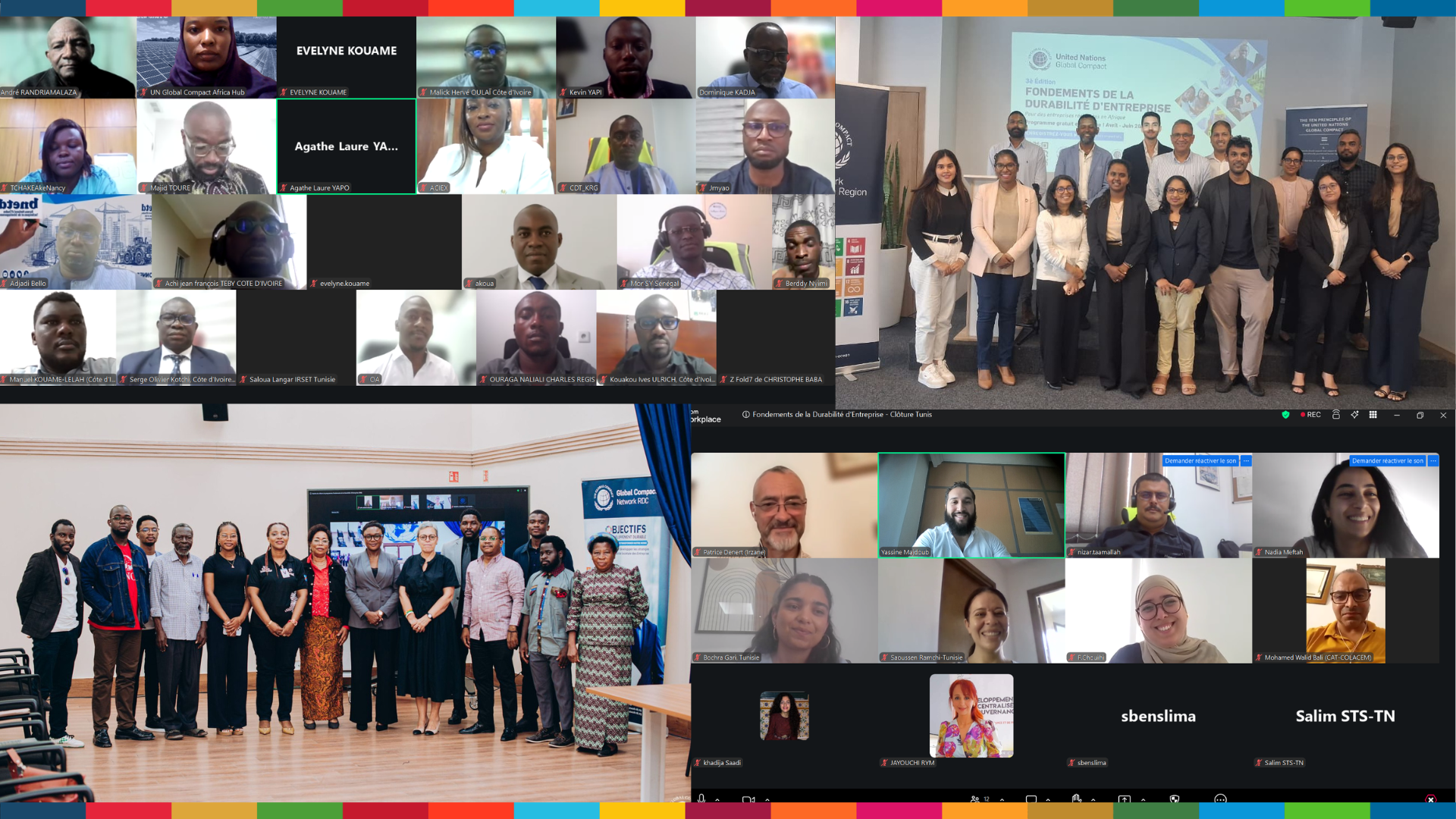
How the SME Program Fondements de la Durabilité d’Entreprise (FDE) Is Strengthening ESG Capacity in Francophone Africa’s Private Sector
November 24, 2025
UN Global Compact Regional Open House
November 12, 2025
UN Global Compact Network Tunisia Marks 10 Years of Sustainability Leadership with Forum on Climate Action
November 7, 2025
DRC’s Private Sector Mobilized for Action at Economic Forum on Sustainable Sanitation in Kinshasa
November 5, 2025
UN Global Compact Network Ghana Hosts Final Solutions Showcase to Advance SDG Innovation
November 3, 2025
Unstoppable Africa 2025: Summary of Outcomes, Announcements & Forward Looking
October 10, 2025
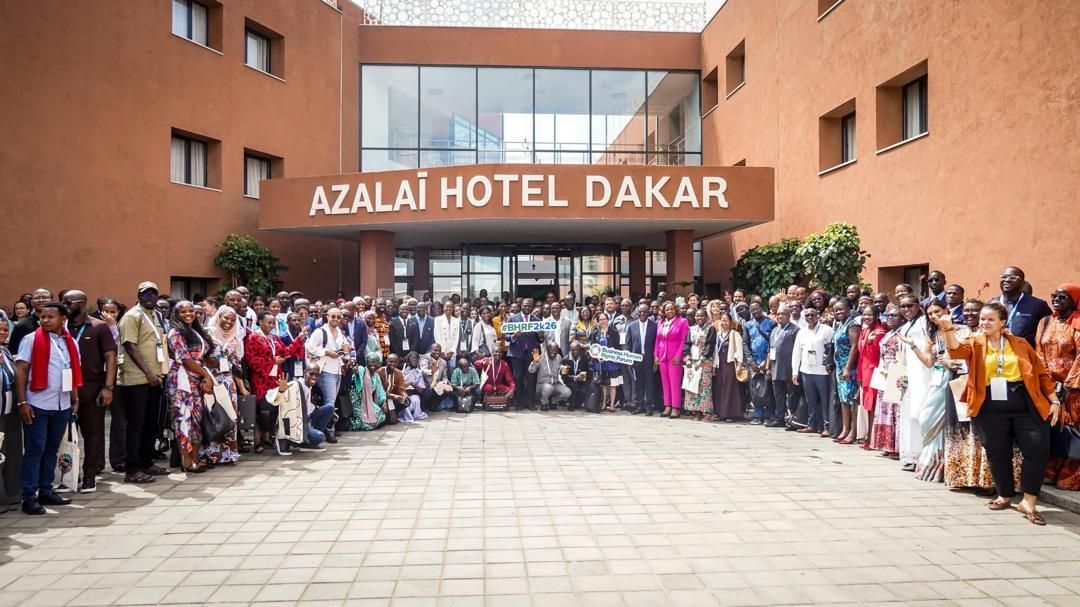
Lusaka, Zambia –9 October 2025 – The 4th African Business and Human Rights Forum (ABRH) concluded today in Lusaka, Zambia, bringing together more than 600 participants, including business leaders, governments, civil society, Indigenous Peoples, national human rights institutions and international partners, to advance the implementation of the United Nations Guiding Principles on Business and Human Rights (UNGPs) across Africa. The Forum, held from 7 to 9 October under the theme “From Commitment to Action: Advancing Remedy, Reparations and Responsible Business Conduct in Africa,” was co-organized by several partners, including the African Union, the UN Global Compact, UNDP, the UN Working Group on Business and Human Rights, UN Human Rights (OHCHR), the African Commission on Human and Peoples’ Rights (ACHPR) and UNICEF. This year’s Forum aligned with the African Union theme, “Justice for Africans and People of African Descent Through Reparations.” Participants focused on concrete steps to strengthen remedy and reparations frameworks and to promote responsible business conduct in the context of Africa’s evolving economic and regulatory landscape. The Forum has become a critical platform for moving from policy to practice, accelerating implementation, and highlighting regional solutions to ensure that businesses in Africa uphold human rights while contributing to inclusive and sustainable development. Over three days, the Forum featured high-level panels, roundtables and clinics, alongside a dedicated UN Global Compact Networking Event. These sessions provided space for governments, businesses and rights holders to exchange experiences, showcase innovations and build partnerships to translate high-level commitments into tangible action. Discussions centred on four priority areas: Strengthening access to remedy for victims of business-related human rights and environmental harms through improved policy frameworks, stronger judicial capacity and more effective grievance mechanisms; Advancing reparations by emphasizing the shared responsibility of states and businesses to address historical and ongoing injustices; Promoting responsible business conduct by embedding human rights due diligence across operations and aligning with regional frameworks such as the African Continental Free Trade Area (AfCFTA) and the draft AU Business and Human Rights Policy; and Enhancing transparency and accountability through digital tools, improved reporting and collective monitoring of commitments. Speaking at the opening of the Forum, Hervé Lado, Africa Head of the UN Global Compact, underscored the urgent need for businesses to embed human rights into their operations and lead by example. “The theme of this year is a call to action for effective remedy, an invitation to go beyond protect and respect. As we develop our new global strategy 2026-2030, we want to equip more businesses in Africa by 2030 with knowledge, expertise and more ambition in upholding the Ten Principles and implementing adequate and effective remedies where their activities have caused adverse impacts. How companies respect human rights and implement remedies is central to building resilient and inclusive economies,” Lado said.
October 7, 2025
UN Global Compact Network Ghana's Summit Sparks Transformation of Food Systems for a Sustainable Future
October 3, 2025
The UN Global Compact Africa Regional Hub in Chad, recently joined the Office of the UN Resident Coordinator to convene a capacity-building and exchange workshop with leaders of small and medium enterprises (SMEs), government representatives and business associations. The session which was held on the 29 and 30 September 2025, revealed a significant opportunity: many SMEs are already contributing to the Sustainable Development Goals (SDGs), often unknowingly, through their daily operations. For example, a local dairy producer discovered that his business directly advances SDGs 1 and 2, and committed to formalising corporate social responsibility practices to deepen his company’s contribution. This experience reflects a broader challenge on SDG awareness among the private sector. While national development plans give the private sector a central role—Chad’s national development plan “Chad Connection 2030” allocates 46 percent of anticipated investments to private actors—, awareness of the SDGs remains limited. Yet evidence shows that private sector engagement is indispensable. Unlocking private sector investment in these sectors, alongside infrastructure and renewable energy, could accelerate growth and resilience. According to the World Bank and International Finance Corporation (IFC), agriculture and pastoralism account for more than half of Chad’s GDP, with 73 percent of households depending on them for income . Yet, awareness of the SDGs among businesses remains low. At the same time, Chad’s new national development plan, Chad Connection 2030, targets over US$30 billion in investment by 2030 , with the private sector expected to play a decisive role. While in N’Djamena for the capacity-building and exchange workshop, Dr. Hervé Lado, Head of the UN Global Compact Africa Regional Hub, urged participants to embrace SDG-centered efforts in their business operations. “Leveraging the momentum from the 80th Anniversary of the UN, the 25th Anniversary of the UN Global Compact and the recent UN General Assembly, the private sector, the government and the UN system in Chad are called to enhance collaboration and catalyze partnerships to accelerate the achievement of the national development plan and the SDGs for the benefit of the populations,” Dr. Lado, expressed. Encouragingly, international partners are stepping up. Afreximbank has pledged up to US$1.5 billion to boost Chad’s private sector , particularly in agriculture and agro-industry. Combined with improved awareness, such commitments demonstrate how local enterprises can transition from being passive beneficiaries of development to active drivers of sustainable change. Strengthening dialogue and capacity building will be essential to ensure that businesses across the Sahel can fully align with the 2030 Agenda and mobilise the investments needed for inclusive and sustainable development.
SHOW MORE ▶