Africa Business and Human Rights Forum Concludes in Dakar with Call for Stronger Action on Human Rights and the Environment
Africa Business and Human Rights Forum Concludes in Dakar with Call for Stronger Action on Human Rights and the Environment
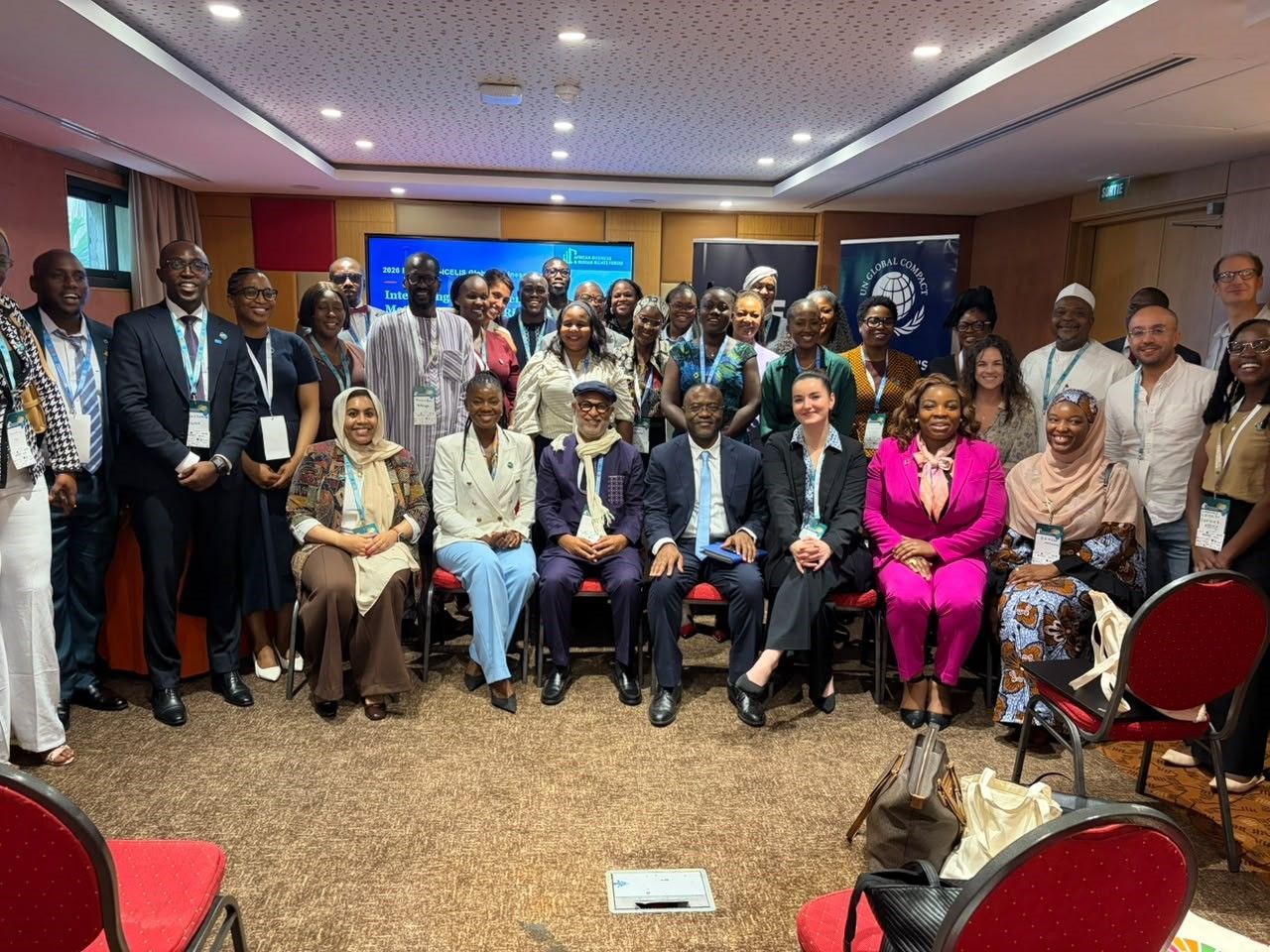
Dakar, Senegal, 1 October 2026 — The fifth Africa Business and Human Rights (BHR) Forum concluded today in Dakar, Senegal, bringing together governments, businesses, the UN, civil society, workers’ representatives, human rights experts and indigenous communities to accelerate responsible business conduct and strengthen the protection of human rights across the continent.
Held from 29 September to 1 October under the theme “Realizing the Right to a Clean, Healthy and Sustainable Environment through Responsible Business Conduct,” the three-day Forum focused on the growing intersection between business, human rights and environmental sustainability, and the practical action needed to protect people and the planet while supporting sustainable economic development.
The Forum was co-organized by the United Nations Global Compact, the United Nations Development Programme (UNDP), the UN Working Group on Business and Human Rights, the UN Human Rights Office (OHCHR), UNICEF and the African Commission on Human and People’s Rights (ACHPR).
Marking its fifth edition, the Forum has become an important regional platform for advancing dialogue and action on business and human rights in Africa, a region estimated to lose approximately US$195 billion each year as a result of environmental degradation, illicit financial flows and unsustainable resource use.
At the same time, countries across the continent are strengthening frameworks for responsible business conduct, including through the development and adoption of National Action Plans on Business and Human Rights in Kenya, Uganda, Nigeria, Liberia, Ghana and soon-to-come, Malawi.
From commitments to implementation
Across three days of discussions, participants focused on practical approaches to strengthen business respect for human rights and environmental sustainability, with particular emphasis on:
- Human rights and environmental due diligence: strengthening companies’ ability to identify, prevent, mitigate and account for adverse human rights and environmental impacts across their operations and value chains.
- Water, sanitation, hygiene and land rights: addressing the impact of business activity on access to safe water, sanitation, hygiene and land, particularly for women and vulnerable and marginalized communities.
- A just transition: exploring how Africa can harness its significant natural resources (30 per cent of the world’s known critical mineral reserves) while ensuring that the transition to greener economies is just, inclusive and grounded in human rights.
- Access to remedy: strengthening effective mechanisms through which people affected by business-related human rights abuses can seek redress, while ensuring affected communities have a meaningful voice in decisions that shape their lives and livelihoods.
Key outcomes
The Forum identified a number of priorities for continued action, including:
- Enforcement and accountability: business commitments, National Action Plans and regulations must translate into real outcomes for people and the planet.
- Beyond compliance: all actors must think beyond compliance. Human dignity must center decision making — meeting minimum thresholds is not enough.
- Collaboration must deliver: no singular entity holds the solution. Systemic challenges need systemic solutions.
- Achieving the right to a healthy, clean and sustainable environment and the just transition is only possible through real partnership across sectors and meaningful engagement of rightsholders, especially the most vulnerable.
- Proportionate benefits: Africa is at the center of the global technological and green transition. Governments and economies must deliver fair, equitable, accessible and inclusive benefits for African peoples and avoid exploitative and harmful impacts on the environment and communities.
- Policies and regulations must be coupled with enforcement and accountability. A Just Transition cannot be decoupled from access to effective remedies for victims.
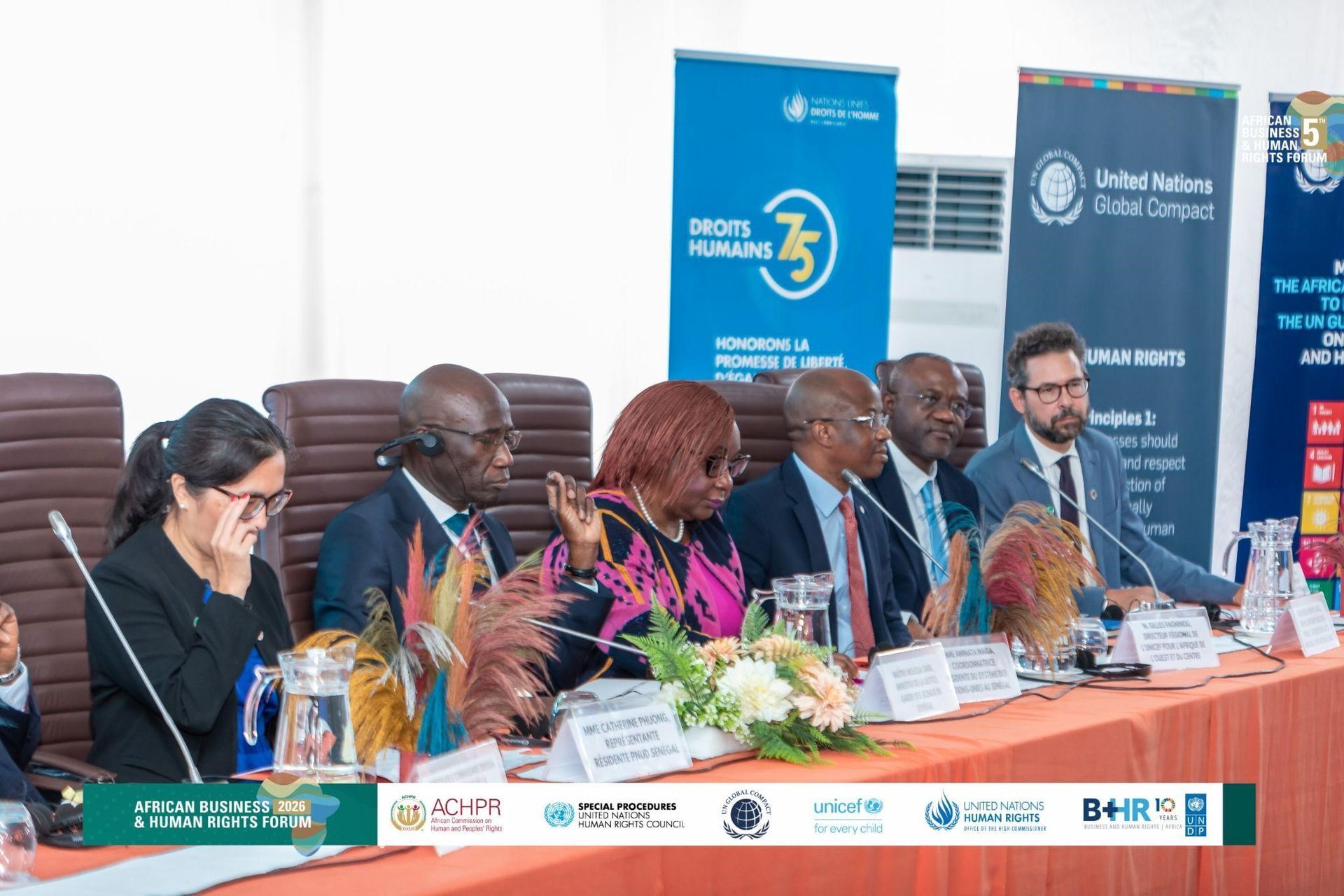
Speaking at the opening of the Forum, HE Moussa Sarr, Minister of Justice and Keeper of the Seals of Senegal, announced that the country’s National Action Plan is under final review and underscored the importance of operationalizing human rights frameworks: “A right without a judge remains a promise. To build a resilient and equitable economy across Africa, responsible corporate conduct cannot remain theoretical — it requires accessible, effective remedy and judicial protections that uphold human dignity and safeguard our environment.”
Hervé Lado, Head of the Africa Hub at the United Nations Global Compact, said: “Harms to people and to nature are deeply intertwined, which is why corporate respect for human rights and environmental protection must go hand in hand. As the region advances energy transition and intra-Africa trade, responsible business conduct is vital for workers and communities. Every year, the Global Compact equips hundreds of companies across the continent to implement human rights due diligence, moving from commitments to practical solutions and positive impacts on the ground.”
The 2026 Africa Business and Human Rights Forum was delivered as a hybrid event, enabling both in-person and virtual participation for 1,100+ delegates, including 21% business representatives, from 45 African countries, especially Senegal, Kenya, Uganda, South Africa, DR Congo, Nigeria, Tanzania and Ghana.