Global Compact Network Kenya Hosts Leaders Dialogue on Social Sustainability
Global Compact Network Kenya Hosts Leaders Dialogue on Social Sustainability
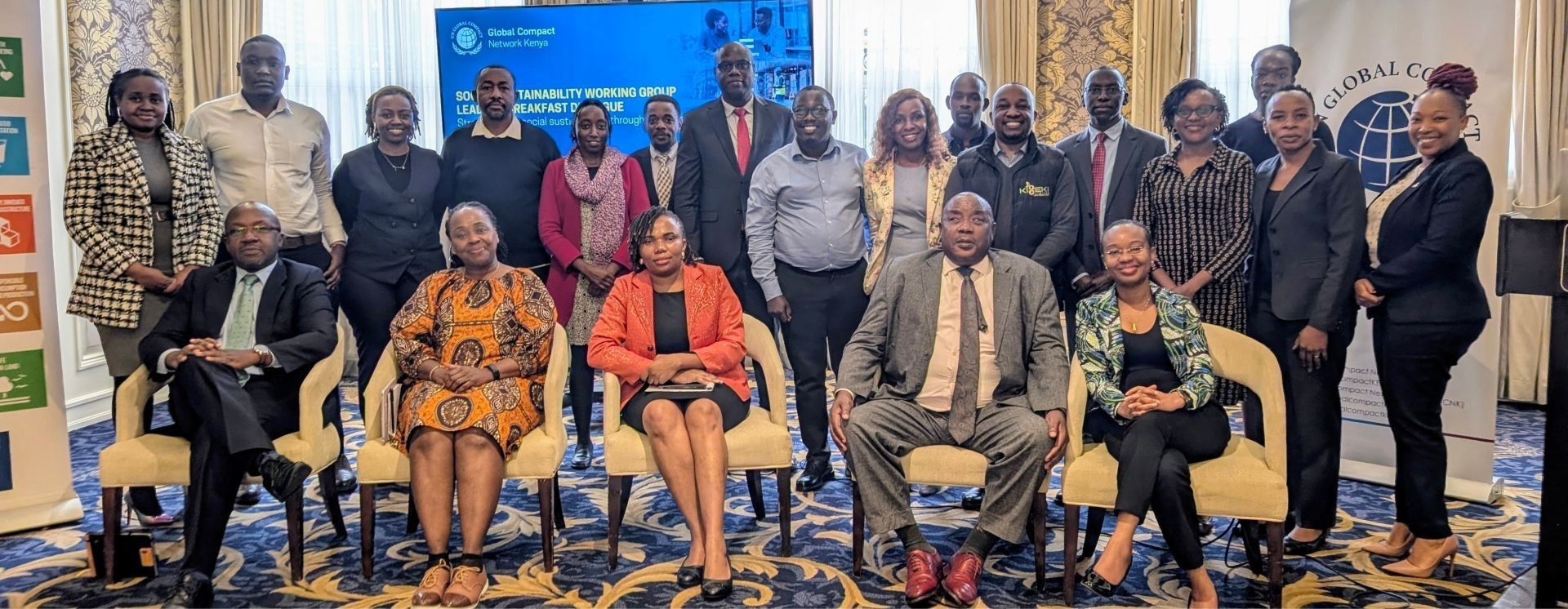
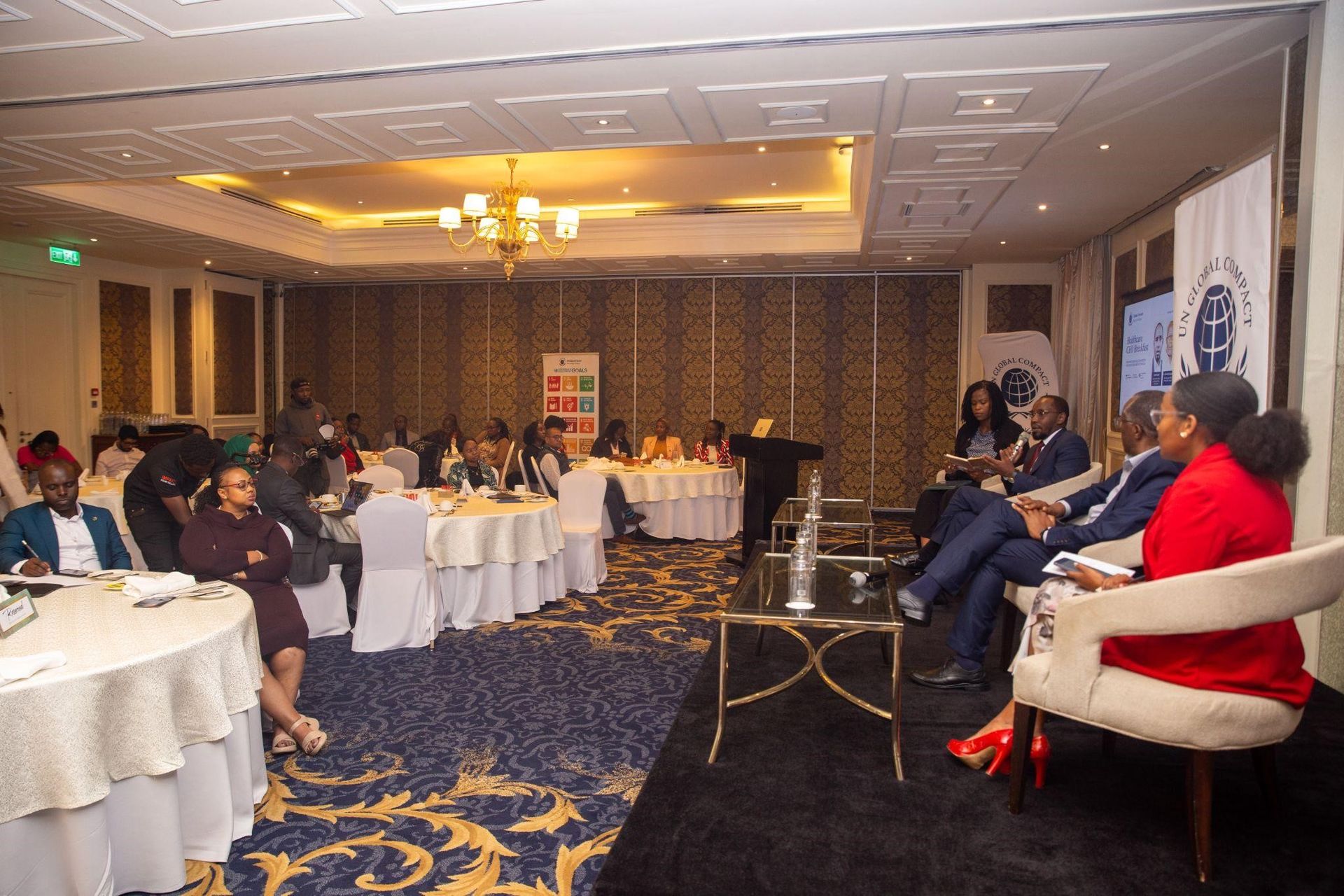
On 28 May 2026, the Global Compact Network Kenya held its Social Sustainability Working Group Leaders Breakfast Dialogue in Nairobi, bringing together private sector, government, civil society, and national commissions to discuss strategies to advance social sustainability in Kenya. The dialogue provided a platform for stakeholders to examine both the challenges and opportunities shaping the country’s social sustainability agenda.
Launched in June 2025, the Social Sustainability Working Group (SSWG) has, since its inception, established a governance structure and identified its priority areas for action. The Working Group is a multi-sector platform comprising 30 members drawn from UN agencies, the private sector including Global Compact participants, academia, government institutions, and civil society organizations.
Its key priorities include advocating for private sector input in social sustainability policies and legislation; supporting the private sector in policy implementation; developing practical tools and resources to advance social sustainability; and strengthening member initiatives through knowledge-sharing and thought leadership, positioning the private sector as a driver of positive social impact.
Executive Director of the Country Network, Judy Njino, highlighted the importance of social sustainability in Africa and Kenya as foundational to long-term economic growth and stability. She emphasized that questions around decent work, inclusion, equity, human rights, and community trust remain critical pillars of responsible business conduct which must move from compliance to intentional business strategy, shaping how companies create value, build resilience, and sustain their social license to operate.
Participants echoed the need to move beyond conversations and commitments toward tangible implementation. They highlighted the value of shared learning, candid reflection on both successes and failures, and the development of practical tools that can help organizations embed social sustainability into everyday business operations.
Responding to that call for action, Lawrence Muiruri, Deputy Solicitor General at the State Department For Justice, Human Rights and Constitutional Affairs, emphasized the government's commitment to partnering with the private sector in key legislative processes such as the review of the National Action Plan on Business and Human Rights. He also highlighted the Working Group's role in translating commitments into practical guidance and bridging state expectations with business realities.
Sharing a private sector perspective, Catherine Gitobu, Managing Director at CKL Africa Ltd, shared the sustainability journey of her organization since joining the UN Global Compact in 2015. Highlighting the role of values based leadership in achieving business growth, operational excellence and social impact. According to Catherine, CKL Africa has incorporated wins into practice: providing lunch for employees, establishing daycare facilities, and implementing mentorship programmes that have directly boosted business productivity.
The dialogue also addressed the persistent challenges facing social sustainability in Kenya. Ruth Getobai Nchagwa, Deputy Director at the Kenya National Commission on Human Rights (KNCHR), pointed to labour rights violations as the most common category of complaints lodged against businesses. She noted a significant disconnect between policy commitments and implementation, particularly in relation to accessible grievance mechanisms.
“Companies have commitments at the leadership level, but the gap widens at implementation, especially among those interfacing with suppliers, contractors, and communities. We should empower workers and communities, make grievance reporting mechanisms accessible, and stop treating community consultation as box-ticking."
As discussions concluded, participants expressed optimism about the role of the Social Sustainability Working Group in fostering a more coordinated national ecosystem for business and human rights. The Working Group affirms its commitment to serve as a catalyst for translating commitments into action, as well as to foster multi-sector collaboration and promote a more inclusive and sustainable future for Kenya.