Strengthening Integrity in Tunisia's Private Sector

Global Compact Network Tunisia Launches Initiative to Promote Transparency and Integrity
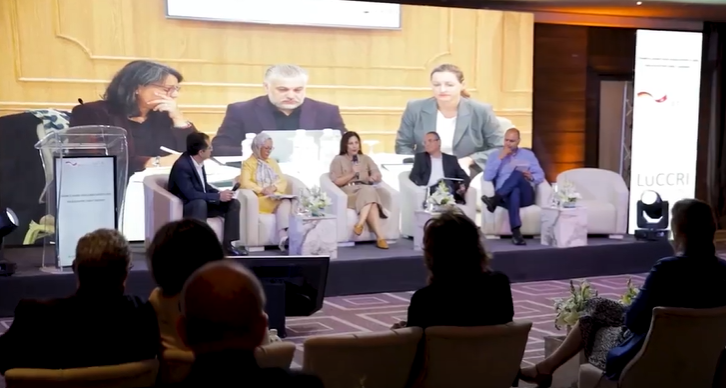
The Global Compact Network Tunisia (GCNT) has launched an initiative to strengthen the culture of integrity in the country's private sector. 


According to the 2020 ICTEQ annual survey on the business climate and competitiveness of companies in Tunisia (21st annual survey on the business climate and competitiveness of companies), 69% of business leaders interviewed consider corruption as a major constraint hindering the development of their business, and 63% of them believe that the phenomenon is increasing from one year to the next.


The initiative titled, "Creation of a core of the private sector to strengthen the culture of integrity," therefore aims to promote transparency, good governance, and integrity among Tunisian businesses, which will subsequently improve business development and the economic development. This initiative supports the 10th principle of the UN Global Compact, "Act against corruption in all its forms," as well as the Sustainable Development Goal (SDG) 16 (Peace, Justice, and Strong Institutions) and SDG 17 (Partnerships for the Goals).


Working with the Global Compact Tunisia (GCNT), the project brings together five representative organizations from the private sector, including the Tunisian Union of Industry, Commerce and Handicrafts (UTICA), the Order of Chartered Accountants of Tunisia (OECT), the Association of Brokerage Intermediaries (AIB), and the Tunisian Association of Venture Capital Investors (ATIC).


Through a series of workshops, the project aims to raise awareness about the importance of economic integrity, provide training on fundamental concepts and tools, and support the development of a strategic vision and action plan to promote integrity in the private sector.


Speaking on the initiative, Executive Director, Global Compact Network Tunisia, Yassine Majdoub, noted "The private sector has a critical role in promoting integrity and transparency in Tunisia. We are committed to supporting this initiative and working together to build a business environment that values ethical practices and good governance."


Thus far, 6 sessions have taken place:


Workshop 1: Commitment of the UN Global Compact Tunisia


Held in January 2023, this workshop launched the 'Fight against Corruption and Strengthening Integrity (LuCCRI)' project by GIZ Tunisia. The initiative aims to establish a core group promoting integrity and transparency in Tunisia's private sector. Key activities included introducing five core structures and clarifying economic integrity concepts, strategic vision, and action plans.


Workshop 2: Reflection on Strategic Vision and Action Plan


This workshop focused on developing a strategic vision and action plan to enhance economic integrity in Tunisia's private sector. Stakeholders from various sectors discussed economic integrity's impact on governance and identified challenges. The event concluded with recommendations and priority strategic axes for implementation.


Workshop 3: Awareness and Information on Integrity


Conducted in Tunis, Sousse, and Sfax between October and November 2023, this workshop aimed to raise awareness about economic integrity and the private sector's role in promoting it. Participants were informed about fundamental concepts and tools for fostering integrity and gathered specific needs from professional organizations involved in the project.


Workshop 4: Introductory Training on Economic Integrity Fundamentals


Held on November 28-29, 2023, this workshop introduced participants to basic economic integrity concepts, best practices, and tools to enhance integrity within companies. It also covered diagnostic and strategic planning tools for improving corporate integrity.


Workshop 5: Advanced Training on Structuring an Integrity Approach


From December 13-15, 2023, this advanced workshop focused on implementing economic integrity systems in companies. Participants learned methodological tools such as corruption risk mapping and the ISO 37001 anti-corruption management standard, tailored to their companies' contexts.


Session 6: Signing of the Declaration of Common Intentions


On May 27, 2024, the final session marked the official launch of the Integrity Core in Tunisia. Five economic entities, including the Tunisian Union of Industry, Commerce and Handicrafts (UTICA) and the Order of Chartered Accountants of Tunisia (OECT), signed a Declaration of Common Intentions to fight corruption in the private sector. This session underscored the core's mission to develop and support an inclusive approach for enhancing economic integrity in Tunisia.
December 4, 2025
Rwanda’s Drive for ESG Practice Receives Significant Boost Through The UN Global Compact Training
December 2, 2025
How the SME Program Fondements de la Durabilité d’Entreprise (FDE) Is Strengthening ESG Capacity in Francophone Africa’s Private Sector
November 24, 2025
UN Global Compact Regional Open House
November 12, 2025
UN Global Compact Network Tunisia Marks 10 Years of Sustainability Leadership with Forum on Climate Action
November 7, 2025
DRC’s Private Sector Mobilized for Action at Economic Forum on Sustainable Sanitation in Kinshasa
November 5, 2025
UN Global Compact Network Ghana Hosts Final Solutions Showcase to Advance SDG Innovation
November 3, 2025
Unstoppable Africa 2025: Summary of Outcomes, Announcements & Forward Looking
October 10, 2025
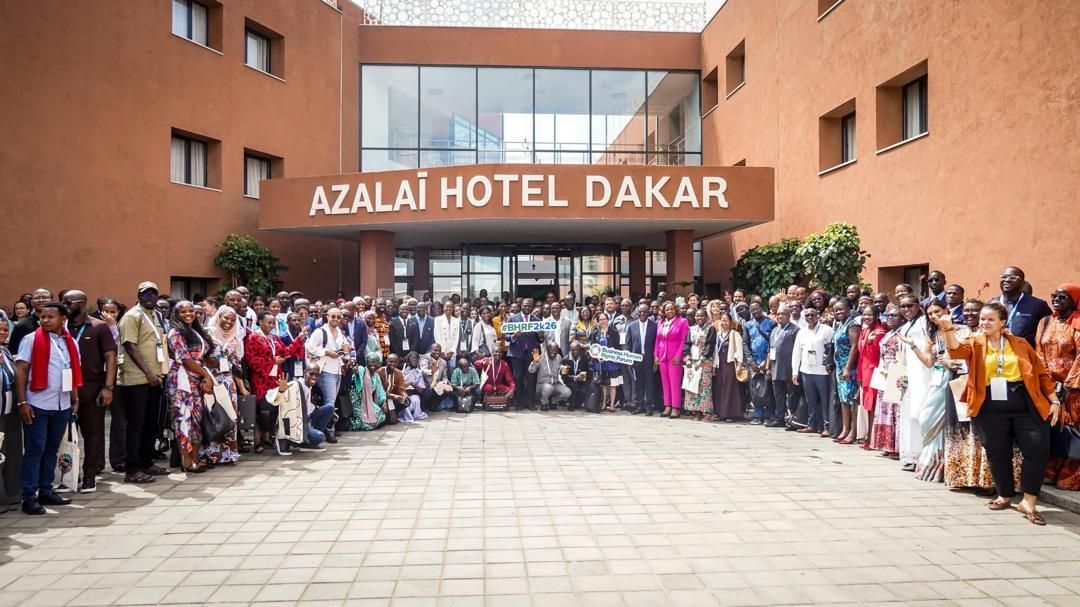
Lusaka, Zambia –9 October 2025 – The 4th African Business and Human Rights Forum (ABRH) concluded today in Lusaka, Zambia, bringing together more than 600 participants, including business leaders, governments, civil society, Indigenous Peoples, national human rights institutions and international partners, to advance the implementation of the United Nations Guiding Principles on Business and Human Rights (UNGPs) across Africa. The Forum, held from 7 to 9 October under the theme “From Commitment to Action: Advancing Remedy, Reparations and Responsible Business Conduct in Africa,” was co-organized by several partners, including the African Union, the UN Global Compact, UNDP, the UN Working Group on Business and Human Rights, UN Human Rights (OHCHR), the African Commission on Human and Peoples’ Rights (ACHPR) and UNICEF. This year’s Forum aligned with the African Union theme, “Justice for Africans and People of African Descent Through Reparations.” Participants focused on concrete steps to strengthen remedy and reparations frameworks and to promote responsible business conduct in the context of Africa’s evolving economic and regulatory landscape. The Forum has become a critical platform for moving from policy to practice, accelerating implementation, and highlighting regional solutions to ensure that businesses in Africa uphold human rights while contributing to inclusive and sustainable development. Over three days, the Forum featured high-level panels, roundtables and clinics, alongside a dedicated UN Global Compact Networking Event. These sessions provided space for governments, businesses and rights holders to exchange experiences, showcase innovations and build partnerships to translate high-level commitments into tangible action. Discussions centred on four priority areas: Strengthening access to remedy for victims of business-related human rights and environmental harms through improved policy frameworks, stronger judicial capacity and more effective grievance mechanisms; Advancing reparations by emphasizing the shared responsibility of states and businesses to address historical and ongoing injustices; Promoting responsible business conduct by embedding human rights due diligence across operations and aligning with regional frameworks such as the African Continental Free Trade Area (AfCFTA) and the draft AU Business and Human Rights Policy; and Enhancing transparency and accountability through digital tools, improved reporting and collective monitoring of commitments. Speaking at the opening of the Forum, Hervé Lado, Africa Head of the UN Global Compact, underscored the urgent need for businesses to embed human rights into their operations and lead by example. “The theme of this year is a call to action for effective remedy, an invitation to go beyond protect and respect. As we develop our new global strategy 2026-2030, we want to equip more businesses in Africa by 2030 with knowledge, expertise and more ambition in upholding the Ten Principles and implementing adequate and effective remedies where their activities have caused adverse impacts. How companies respect human rights and implement remedies is central to building resilient and inclusive economies,” Lado said.
October 7, 2025
UN Global Compact Network Ghana's Summit Sparks Transformation of Food Systems for a Sustainable Future
October 3, 2025
The UN Global Compact Africa Regional Hub in Chad, recently joined the Office of the UN Resident Coordinator to convene a capacity-building and exchange workshop with leaders of small and medium enterprises (SMEs), government representatives and business associations. The session which was held on the 29 and 30 September 2025, revealed a significant opportunity: many SMEs are already contributing to the Sustainable Development Goals (SDGs), often unknowingly, through their daily operations. For example, a local dairy producer discovered that his business directly advances SDGs 1 and 2, and committed to formalising corporate social responsibility practices to deepen his company’s contribution. This experience reflects a broader challenge on SDG awareness among the private sector. While national development plans give the private sector a central role—Chad’s national development plan “Chad Connection 2030” allocates 46 percent of anticipated investments to private actors—, awareness of the SDGs remains limited. Yet evidence shows that private sector engagement is indispensable. Unlocking private sector investment in these sectors, alongside infrastructure and renewable energy, could accelerate growth and resilience. According to the World Bank and International Finance Corporation (IFC), agriculture and pastoralism account for more than half of Chad’s GDP, with 73 percent of households depending on them for income . Yet, awareness of the SDGs among businesses remains low. At the same time, Chad’s new national development plan, Chad Connection 2030, targets over US$30 billion in investment by 2030 , with the private sector expected to play a decisive role. While in N’Djamena for the capacity-building and exchange workshop, Dr. Hervé Lado, Head of the UN Global Compact Africa Regional Hub, urged participants to embrace SDG-centered efforts in their business operations. “Leveraging the momentum from the 80th Anniversary of the UN, the 25th Anniversary of the UN Global Compact and the recent UN General Assembly, the private sector, the government and the UN system in Chad are called to enhance collaboration and catalyze partnerships to accelerate the achievement of the national development plan and the SDGs for the benefit of the populations,” Dr. Lado, expressed. Encouragingly, international partners are stepping up. Afreximbank has pledged up to US$1.5 billion to boost Chad’s private sector , particularly in agriculture and agro-industry. Combined with improved awareness, such commitments demonstrate how local enterprises can transition from being passive beneficiaries of development to active drivers of sustainable change. Strengthening dialogue and capacity building will be essential to ensure that businesses across the Sahel can fully align with the 2030 Agenda and mobilise the investments needed for inclusive and sustainable development.
SHOW MORE ▶